

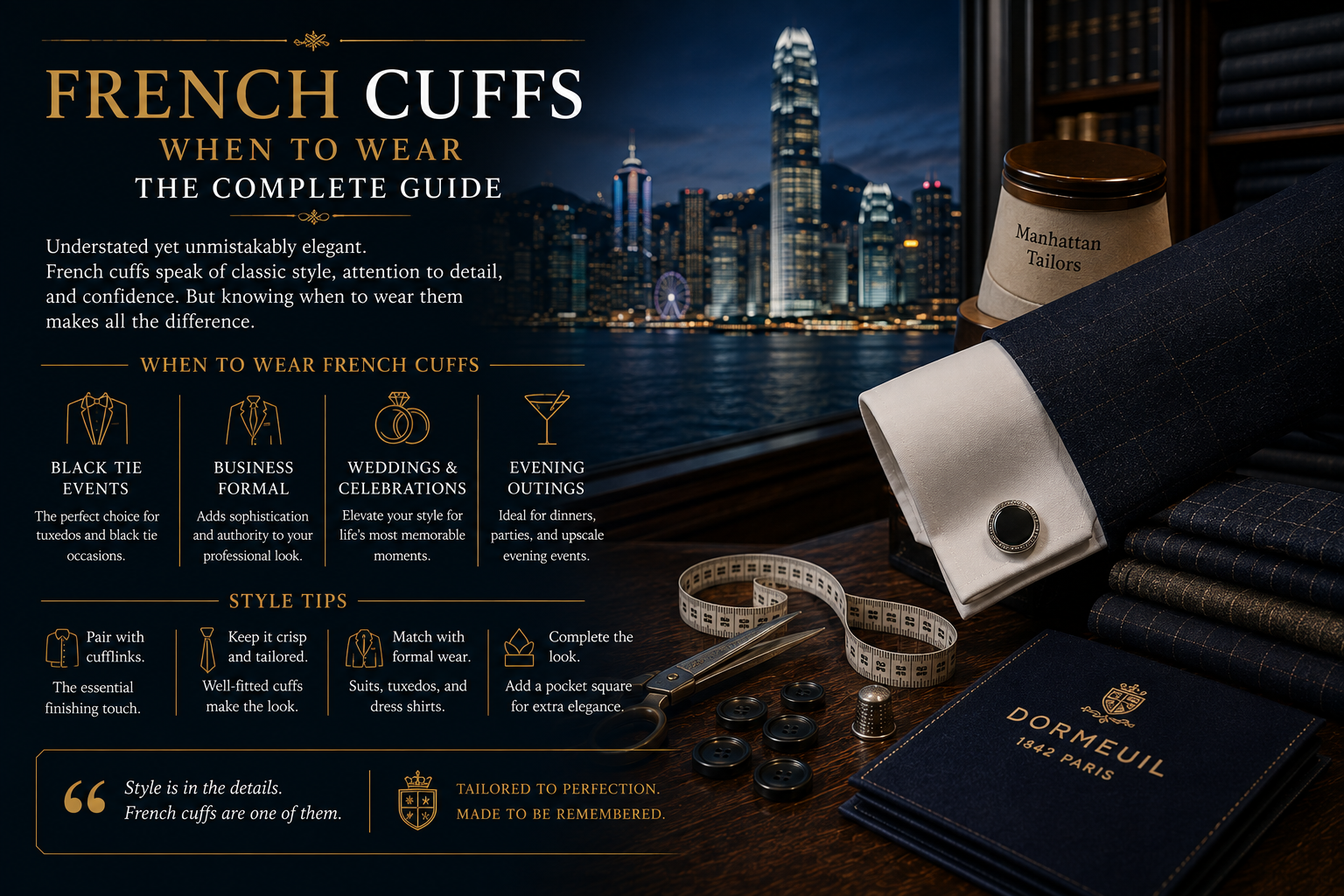
What are French cuffs? French cuffs are double-length shirt cuffs that fold back on themselves and fasten with cufflinks instead of buttons. They are the most formal cuff style: expected with a tuxedo, and a sharp choice with a business suit for important meetings, weddings and evening events. For everyday and casual shirts, a barrel (button) cuff is the better fit.
What Are French Cuffs?
A French cuff — also called a double cuff — is a shirt cuff that is folded back on itself and fastened with cufflinks rather than buttons. The cuff is twice the length of a standard button cuff, folded back to create a double layer of fabric at the wrist. This additional fabric and the cufflinks that hold it together give the French cuff its distinctive appearance: a wide band of shirt fabric visible below the jacket sleeve, with a cufflink centred on the outside of the wrist.
The result is more formal, more elegant, and more visible than a single button cuff. When a man raises his arm or reaches across a table, the French cuff and its cufflink are prominently displayed — which is precisely the point.
At Manhattan Tailors, French cuffs are one of the most frequently requested options in our bespoke shirt consultations — alongside spread and cutaway collar styles.
When French Cuffs Are Appropriate
Formal Business Contexts
French cuffs are entirely appropriate — and in some industries expected — in formal business environments. Banking, law, finance, and consulting are the natural homes of the French cuff. In these contexts, where bespoke suits are standard daily dress and attention to detail in clothing signals attention to detail in work, a well-chosen pair of cufflinks in a French cuff shirt is a mark of considered professional dressing.
The key word is formal. In a formal business environment — client meetings, boardrooms, presentations, court appearances — French cuffs are appropriate. In casual business environments — creative agencies, tech companies, open-plan startups — they will appear out of place regardless of how well they are worn.
Black Tie and Formal Evening Events
French cuffs are the standard for black-tie dress shirts. A pleated-front or plain white dress shirt with a French cuff and simple silver or mother-of-pearl cufflinks is the correct pairing for a tuxedo or dinner jacket. Wearing button cuffs with a tuxedo is technically incorrect — the formality of black tie demands a cufflink shirt.
Weddings
For formal weddings — as a guest or as the groom — a French cuff bespoke shirt is an excellent choice. Many grooms choose to add a personalised monogram to their French cuff wedding shirt — initials embroidered in a chosen thread colour on the cuff is a lasting detail that makes the shirt genuinely unique.
Smart Occasions
Smart restaurant dinners, theatre or opera evenings, and formal social events are all appropriate contexts for French cuffs, provided the overall outfit — suit and tie — matches the formality level of the shirt detail.
When French Cuffs Are NOT Appropriate
Casual Business Environments
In open-plan offices, creative industries, and any workplace where the dress code is smart casual or below, French cuffs will appear overdressed. The formality of the cufflink draws attention in an environment where it is unexpected. In these contexts, a bespoke shirt with a single button cuff and a clean spread or button-down collar is the better choice.
Without a Jacket
French cuffs without a jacket — in a just-shirt context — rarely work. The cuff is designed to appear below a jacket sleeve, and worn alone it can appear heavy and slightly eccentric. If you are removing your jacket during the day, single cuffs are more practical and appropriate.
With Casual Clothing
French cuffs with chinos, jeans, or casual trousers create a jarring contrast between a formal shirt detail and casual lower-half clothing. The French cuff belongs with a suit or at minimum a well-pressed pair of formal trousers.
How to Wear French Cuffs Correctly
Cufflink Choice
For business: Simple, understated cufflinks in silver, gold, or mother-of-pearl. Avoid novelty designs in professional contexts.
For black tie: White mother-of-pearl or plain silver. The dress shirt cufflink should complement the elegance of the tuxedo rather than compete with it.
For weddings: More scope for personality — coloured stone cufflinks, meaningful objects, or personalised monogrammed cufflinks all work well.
How Much Cuff Should Show
Approximately half an inch (1.2 cm) of shirt cuff should be visible below the jacket sleeve. With French cuffs, which are wider than single cuffs, this measurement applies to the folded edge of the cuff. The cufflink should sit roughly centred on the visible band of cuff below the jacket. This is one of the proportions our tailors check carefully during the bespoke shirt fitting.
Collar Pairing
French cuffs pair naturally with more formal collar styles — spread, cutaway, or tab collar. A button-down collar with French cuffs creates a mixed formality signal that generally does not work well. For black tie, a wing collar or collarband is the traditional choice.
Bespoke French Cuff Shirts at Manhattan Tailors
Every bespoke shirt at Manhattan Tailors is made with your choice of cuff style — French, single button, or cocktail cuff — as part of the initial consultation. We source premium cotton poplin, twill, and end-on-end fabrics from leading mills, and our master artisans hand-cut and hand-sew every shirt to your precise measurements.
Monogramming is available on the cuff, chest, or collar for an additional personal detail. Visit us at 186 Nathan Road, Tsim Sha Tsui — book a shirt consultation or call +852-9773-2691.